

On this page
Creative strategy in advertising is the plan that decides what a campaign's ads say, to whom, in which formats, and how the team will judge them. It comes before any concept is written, and for a performance team it turns a growth target into a short list of distinct concepts and a rule for what to make once results arrive.
Google's July 2026 article on YouTube ad creative performance calls creative quality the biggest lever. Its evidence is an Ekimetrics meta-analysis commissioned by Google in 2024, in which creative features explained 60% of YouTube sales contribution across 2,096 campaigns from 13 brands in beauty, luxury, hospitality and automotive.
What creative strategy in advertising contains
A paid campaign's creative strategy has six components, written in order, each one narrowing the choices for the next:
- Objective and measure: one business outcome, one primary metric and one guardrail. The primary metric is the one the media team optimizes toward, such as cost per install, trial start or qualified demo. Attention metrics such as hook rate diagnose an opening; they do not pick the winning concept.
- Audience and insight: segments named by persona or use case, the split Meta's creative diversification guidance recommends. The insight is one observed tension or habit the ad can show. Two segments with the same motivation are one segment with two targeting lists.
- Offer: what the viewer gets for acting, such as a free trial, a launch reward or a demo. Hold it fixed across a round's concepts.
- Message and opening seconds: one proposition per concept and the line or image that carries it first. TikTok's creative best practices advise introducing the proposition in the first 3 seconds and prioritizing the hook in the first 6. Write each opening into the strategy, not into the edit.
- Format and placement: aspect ratios, lengths and the placement each concept is built for first. Name one primary placement per concept and treat the others as versions of it.
- Testing plan and iteration rules: how many concepts run per round, how long a round lasts, and the minimum spend per concept. It also sets what happens to winners, losers and ads with too little delivery to judge. Test design is covered in Starti's creative testing guide; the strategy holds the rules above any single test.
Gaps show up in predictable places. With no primary metric, every concept has a case for winning. With no named segments, concepts drift toward near copies, which Meta groups as variations of one creative.
How creative strategy differs from a brief, a concept and media strategy
- Creative strategy: which concepts the campaign runs and how they will be judged, for a campaign or a quarter. It changes when results change.
- Media strategy: where, when and at what budget the ads run, with the bidding goal and targeting. It shares the objective and primary metric with the creative strategy.
- Creative brief: instructions for one production job, drawn from the strategy: message, proof, placement, assets, rights and review path, as in the three filled-in video brief examples.
- Concept: the single idea that carries one segment's proposition, such as a city growing from an empty plot. A strategy holds several concepts; a brief usually produces one.
Write the strategy first, align the primary metric with the media plan, then write one brief per concept. A document with script lines and scenes is a brief. A channel budget split belongs to media strategy, and segments with a primary metric and retirement rules belong to creative strategy.
A seasonal flight such as a holiday campaign uses the same fields, with every retirement rule set before launch.
How platform mechanics shape a creative strategy
Meta's post on creative diversification says ads that look or feel alike are seen as variations of the same creative, with learnings and delivery shared at the creative level. It separates diversification, meaning unique assets for different personas or use cases, from iteration, meaning manual A/B testing to refine assets, formats and messages. Its iteration example is two ads with identical visuals and different text calls to action.
Count by concept: twelve ads cut from two scripts are two concepts on Meta. Give each segment its own visuals as well as its own words, and log copy or call-to-action changes as iterations of their parent concept.
TikTok's guidance puts numbers on the same idea, suggesting 3 to 5 different creatives per ad group and 3 to 5 diversified ad groups per campaign, with big differences between creatives, especially in testing. A three-concept round fills one ad group at the low end of that range, and two iterations of the leading concept bring it to five after the first read.
Google's ABCD principles work as the pre-launch gate. The four are Attention (hook and sustain it), Branding (early, often and richly), Connection (help people think or feel something) and Direction (ask them to take action). Hold production until each concept's script and first frame pass all four, and send any concept that fails one back to the script.
Creative strategy examples
A Demand Gen example from Google
Google's October 2026 YouTube marketing playbook describes the creative behind Chrome's US desktop direct-response campaigns on Demand Gen. The team rotated five core product themes and paired them with bespoke creative for segments such as gamers, shoppers and business professionals. Assets came as horizontal CTV cuts, vertical Shorts and square feed units at six, 15 and 30 seconds.
The pairing is the part to copy: themes carry what the product does, segments carry who it is for, and each segment gets creative made for it.
A filled-in creative strategy for a mobile game launch
Take a city-building game launching in the US on iOS and Android, with paid social and YouTube as launch channels.
- Objective: installs in the first four weeks after launch, judged on cost per install against the launch plan's target. Day-7 retention at or above the soft-launch cohort is the guardrail.
- Segments and insights: planners, who enjoy turning an empty map into an ordered city; commuters, who want visible progress in a five-minute session; social players, who want to visit and help friends' cities.
- Offer: the launch-week starter pack, identical in every concept and on the store page.
- Concepts and openings: one per segment, each with its own footage. Planners see an empty plot fill with streets in time-lapse. Commuters see a session timer on a phone in a train. Social players see a notification that a friend's city needs help. Each concept states its proposition by second 3 and shows the game's name early.
- Formats: 9:16 at 15 seconds as the primary build for Reels, TikTok and Shorts. Concepts that pass round one get 30-second cuts and 16:9 versions for YouTube in-stream.
- Round one: the three 15-second concepts in one ad group per platform for two weeks, with a minimum spend per concept set before launch, read on cost per install. Hook rate and hold rate diagnose the opening and the scenes after it.
- Decision rules: a winner keeps its segment and gets two iterations in round two, new openings over the same footage. A concept that misses from launch is replaced with a new segment or use case, not re-edited. A winner whose cost per install climbs after a strong start gets a fresh concept for the same segment.
- Owners: the UA lead owns the primary metric and the read; the creative strategist owns segments, concepts and the next brief.
A SaaS sign-up campaign changes three fields. Cost per activated trial becomes the primary metric. Segments split by job to be done (the analyst who builds a report, the manager who reads it), and the opening shows the product screen as proof.
How results feed the next version
At the end of a round, read each concept in this order:
- Delivery: did the concept reach its minimum spend? One that fell short carries into the next round unchanged.
- Primary metric: did it beat the target? Winners move to iteration: new openings, calls to action or lengths on the same concept.
- Trend: did a winner start strong and then decline? TikTok advises adding new creatives to the existing ad group when delivery declines consistently. A declining winner gets fresh creative for the same segment.
- Cause: for a concept that missed from launch, check the segment and the offer before the edit. Another cut of a losing idea is iteration where the result called for diversification.
Patterns across many ads need consistent tags. Starti's guide to creative intelligence sets out a tag vocabulary for app and game ads and how many ads it needs before groups can be compared.
Update the strategy document once per round, not per daily report. Record which segments are proven, which concepts are retired, and which opening the next brief tests.
From strategy to next brief in AI Studio
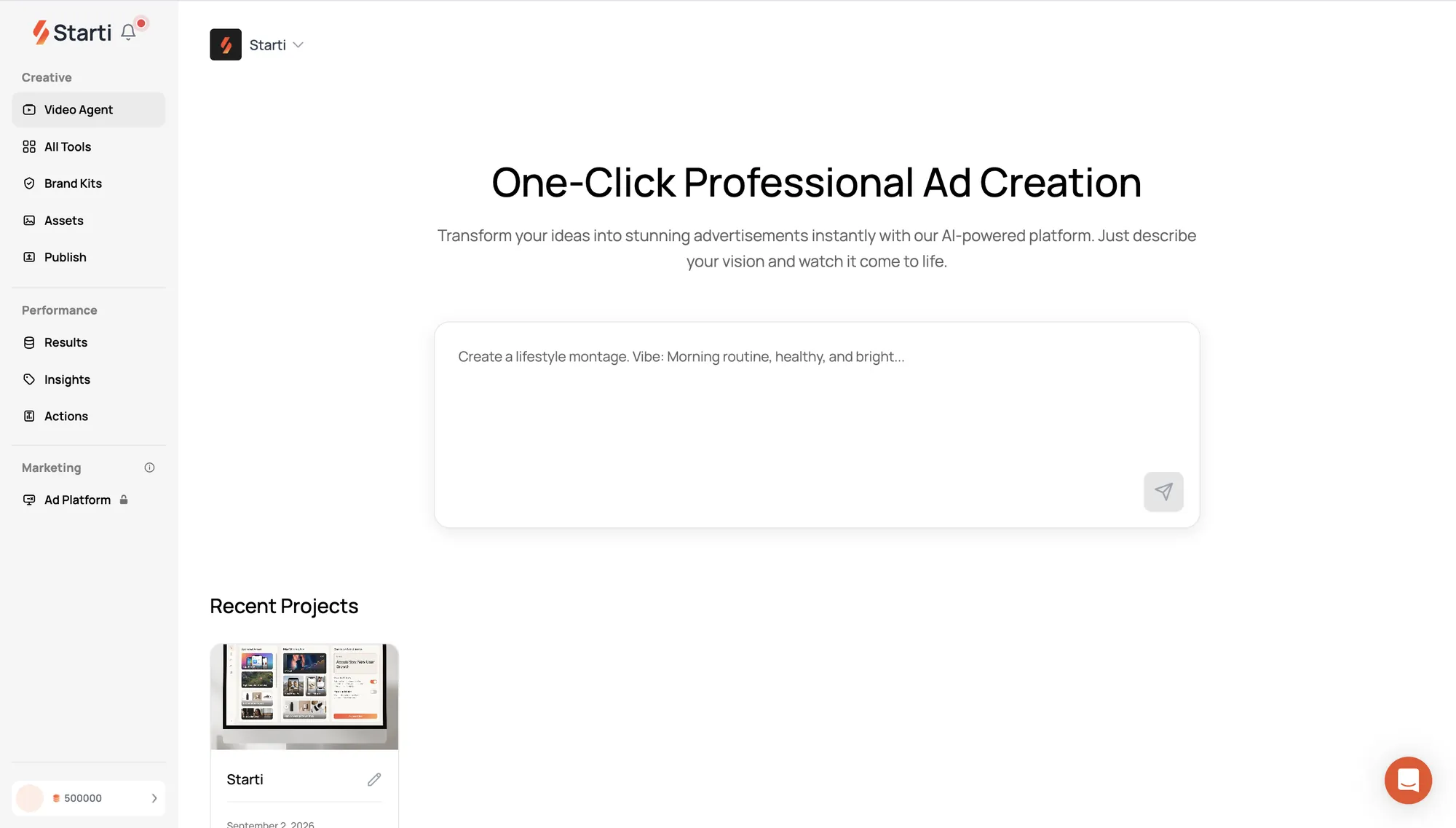
In Starti AI Studio, Video Agent starts with the strategy. The team defines the campaign goal, audience, offer and key message upfront, turns the brief into concepts, scripts and storyboards, and approves the idea before production begins. A finished video can be reframed to 9:16, 16:9, 1:1 and 4:5.
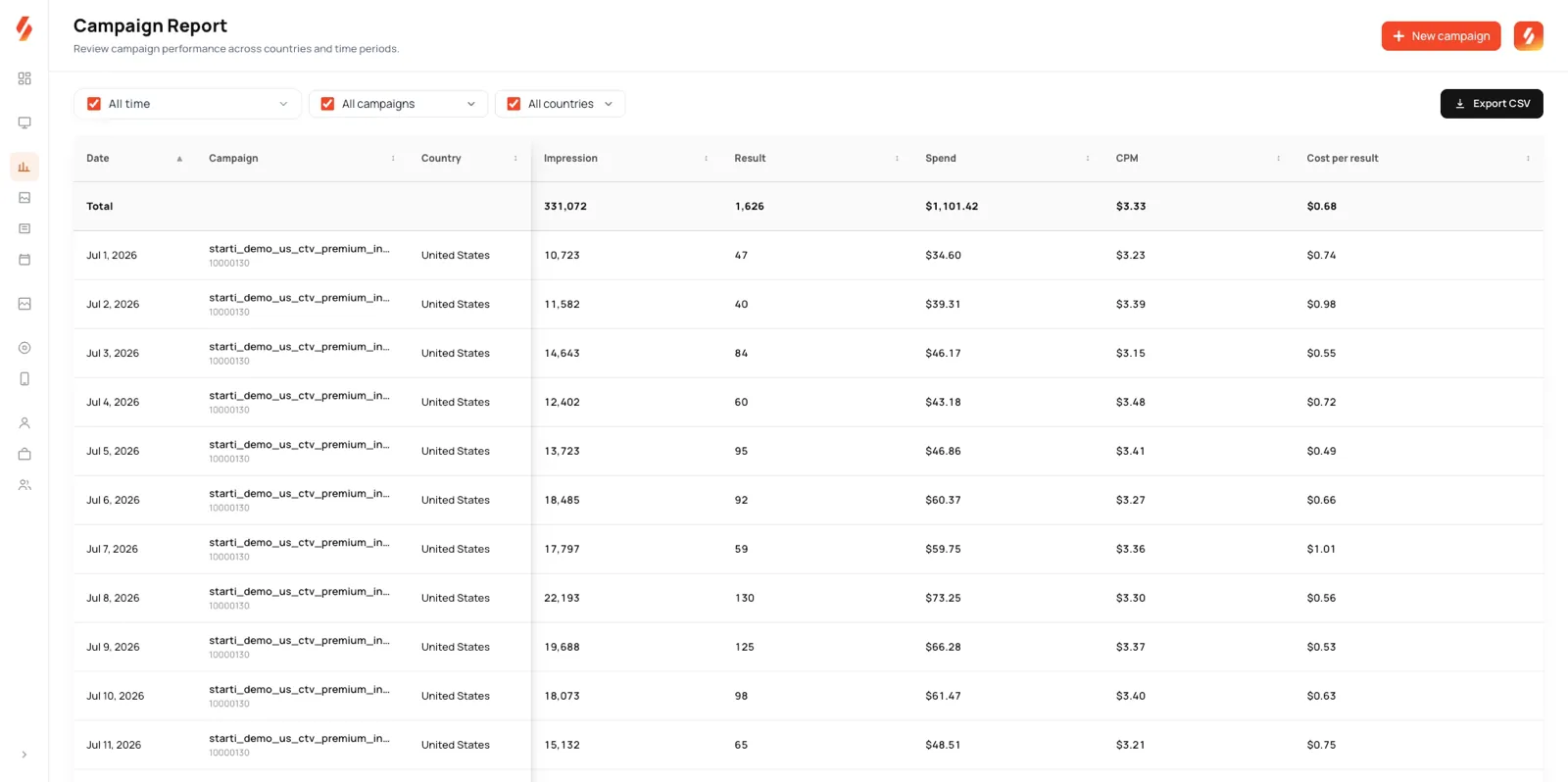
Smart Insight reads the results across Meta, TikTok, Google Ads and configured custom networks. A finding becomes a brief with the evidence, what to change and what to test, for the existing creative team or for the next version in AI Studio.
Frequently asked questions
What is creative strategy?
The plan that sets a campaign's objective and primary metric, audience segments, offer, message, formats and the rules for what to make next, before concepts are written.
Who owns the creative strategy?
Two people share it: the UA or growth lead owns the primary metric and the read, and the creative strategist owns segments, concepts and the next brief.
How many concepts does a first round need?
One per audience segment or use case, each with its own visuals. Three concepts in one ad group sit at the low end of TikTok's 3 to 5 creatives per ad group.
How often should a creative strategy change?
Once per test round, after every concept has been read against the primary metric. Daily reports feed iterations inside a round.