
Video Brief Examples: Three AI Video Ad Briefs, Filled In
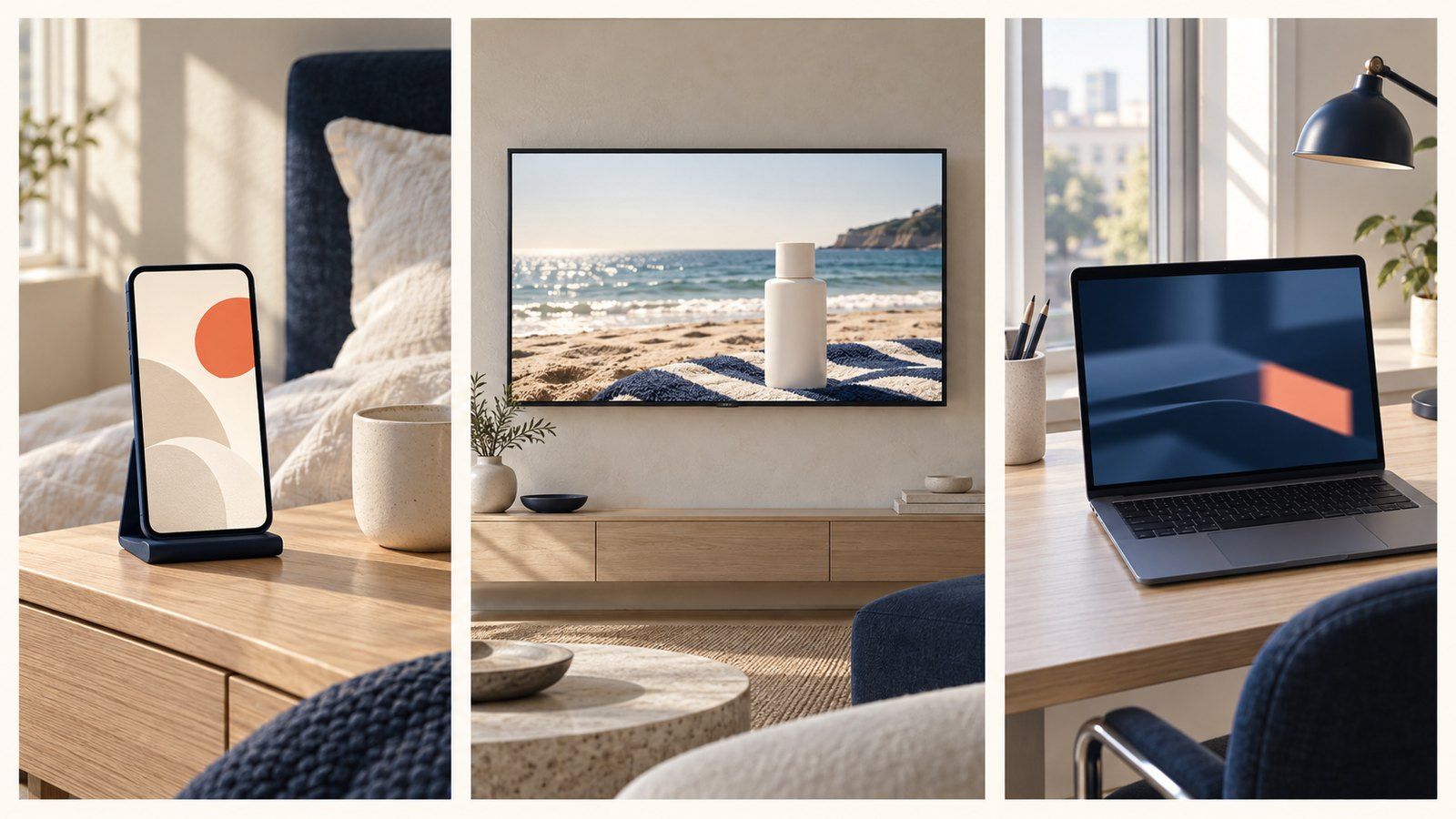
A good video brief for an AI video ad fits on one page and answers twelve questions. They cover goal, audience, offer, action, message, proof, placement, brand direction, approved assets, rights, review path, and the test variable. The three completed video brief examples are a subscription app, a direct-to-consumer product, and a B2B software demo, each built around the decisions real briefs get wrong.
Each example uses the twelve fields from Starti's video brief template. Placement, rights, and the test variable change with the business model. The rule that every claim needs a source does not.
Example 1: A subscription app driving free trials
Renewly is a fictional app that tracks recurring charges. The team wants a 15-second vertical ad for a trial campaign.
- Campaign goal: Start free trials from paid social. Evaluate on trial starts within 7 days of click.
- Audience: US adults who pay for four or more subscriptions and check their bank app more than once a week. Aware of the problem, not of the product.
- Offer: 14-day free trial, no card required. Approved wording only.
- Desired action: Tap to the trial page. Landing page shows the same three-subscription example as the ad.
- Primary message: Every renewal, one screen, before it charges you.
- Proof and claim support: Product screen recording of the renewals view, dated. No savings figure. "Cancel in one tap" allowed only for the two services where the integration is live.
- Placement and delivery: 9:16, 15 seconds, Reels and Shorts. Captions on. Product screen inside the safe area.
- Brand direction: Calm, no alarm sounds, no red. Logo in the first two seconds. Product UI shown as it ships.
- Approved assets: Renewals screen capture v3, app icon, two approved notification sounds.
- Rights and restrictions: Screen capture shows fictional accounts only. No third-party service logos larger than they appear in the product.
- Review path: Product marketing for accuracy, legal for the cancel claim, media for format, founder for final.
- Measurement and next test: Trial start rate by opening. Test variable: problem-first opening versus product-first opening.
What this brief prevents:
- Generated screens showing a savings number nobody can support.
- Cancellation claims that reach services the integration does not cover.
- Vertical cuts that hide the product screen under the caption bar.
Example 2: A DTC brand launching a product
Northline is a fictional skincare brand launching a new sunscreen. The team wants a 30-second horizontal spot for streaming placements and a 6-second cut for social.
- Campaign goal: Launch awareness with a purchase path. Evaluate on landing page sessions and first orders within 14 days.
- Audience: US women 28 to 45 who already buy sunscreen year-round and read ingredient lists. Aware of the category, not of the brand.
- Offer: Launch bundle at the standard price. No discount language.
- Desired action: Visit the product page. Same hero shot on the ad and the page.
- Primary message: Daily sun protection that disappears on skin.
- Proof and claim support: SPF value as printed on the approved label. "Disappears on skin" is a visual demonstration, not a tested claim. No dermatologist claim. No "reef safe."
- Placement and delivery: 16:9, 30 seconds for streaming, sound on, offer carried by the story. 6-second 1:1 cut for feed.
- Brand direction: Natural light, real skin texture, no filters that smooth skin. Bottle shown from the approved packshot angle.
- Approved assets: Packshot set v2, label artwork, approved texture macro footage.
- Rights and restrictions: No generated faces resembling real people. Any generated presenter must be reviewed against the likeness policy. Music from the licensed library only.
- Review path: Brand for visual, regulatory for label claims, media for streaming specs, marketing director for final.
- Measurement and next test: Product page sessions per thousand impressions. Test variable: texture demonstration first versus person first.
What this brief prevents:
- Generated bottles that do not match the label.
- Skin-smoothing filters that break the brand promise.
- Thirty-second cuts that pass review on a laptop and then fail the streaming spec.
Example 3: A B2B software company booking demos
Ledgerline is a fictional analytics tool for finance teams. The team wants a 20-second demo ad for a paid campaign on professional networks.
- Campaign goal: Demo requests from finance leaders at mid-size companies. Evaluate on qualified demo requests within 30 days.
- Audience: Heads of FP&A and finance directors at companies with 200 to 2,000 employees who close the books in spreadsheets. Aware of the pain, skeptical of tools.
- Offer: A 30-minute demo with a finance specialist. No trial.
- Desired action: Submit the demo form. Form asks the same two qualifying questions the ad implies.
- Primary message: Close in days, not weeks, with the reconciliations already done.
- Proof and claim support: "Days, not weeks" is a positioning line, not a measured claim, and must be phrased as the product's purpose. No customer numbers. Product screens from the approved demo environment only.
- Placement and delivery: 16:9, 20 seconds, professional network feed, sound off by default, captions carry the message.
- Brand direction: Product UI leads, no stock office footage, no generated executives. Muted palette, one accent color.
- Approved assets: Demo environment recording, approved chart set, logo.
- Rights and restrictions: Demo data must be synthetic and labeled. No competitor names.
- Review path: Product for UI accuracy, legal for the positioning line, demand generation for form match, VP marketing for final.
- Measurement and next test: Qualified demo rate by opening. Test variable: reconciliation screen first versus the closing calendar first.
What this brief prevents:
- Dashboards generated with features the product does not have.
- Positioning lines that read as a guarantee.
- Messages that disappear when the sound is off.
What changes across the three
Placement drives more than format. The streaming spot in Example 2 carries its offer in the story because a streaming viewer cannot click through. The professional network ad in Example 3 puts the message in captions because the feed plays silent. The trial ad in Example 1 keeps the product screen inside the safe area because the caption bar covers the bottom of a vertical frame.
Proof looks different in each business. The app can show a real product screen. The skincare brand can show a label but must treat "disappears on skin" as a demonstration. The software company cannot show customer numbers at all, so its strongest line is a purpose statement, not a result.
Rights arrive from different directions. Generated presenters raise likeness questions in Example 2. Synthetic data raises labeling questions in Example 3. Third-party logos raise trademark questions in Example 1.
The test variable is always one thing. Every brief names one opening to test against one alternative, with one metric. Three variables in one test produce a result nobody can act on.
How the briefs run in production
Once a video production brief like this is written, the work is to keep it attached to everything that follows. In Starti Video Agent, the brief sits on the same canvas as the concept options, storyboard, and cut. A reviewer checking scene three against the claims list sees both at once, and a change request lands on one scene instead of the whole cut.
For the stages after brief approval, see the AI video ad production guide.
Send a brief you are working on now to a Starti demo and see how it becomes a storyboard.
Frequently Asked Questions
How long should a video brief be?
One page for most campaigns. Regulated or multi-market work may attach a claims record or a rights record. The brief itself should stay short enough that a producer, a media buyer, and a reviewer can all read it in five minutes.
Should the brief include the script?
No. The brief records the decisions the script depends on. Writing the script inside the brief locks the creative before the concept has been reviewed.
How many claims should a brief allow?
As few as the message needs. Each claim in the brief carries a source and a reviewer, and each one adds a review step. Across the three briefs, two or three claims each is enough, with the rest treated as visual demonstration.
Do these briefs work for agencies?
Yes. Agencies add a client sign-off to the review path and a usage-rights line for any footage the client supplies. The other ten fields are the same.