
On this page
AI creative production is the workflow an ad team uses to turn a brief into approved ads. AI generates concepts and scenes, reframes versions, and reads results; people decide the brief, the direction, and every approval. For a growth or UA lead, the gain is more distinct concepts in the same week.
In IAB's January 2026 study, 83% of 104 US ad executives said their company had deployed AI in the creative process, up from 60% in the 2024 study. WFA's State of AI in Marketing 2026 is based on 54 senior respondents from 46 of the world's top brand owners. In it, 80% use AI for content creation and 74% for content ideation and production, and 57% require review and approval of AI-generated outputs. With generation this common, the advantage sits in the workflow around it.
What is creative production?
Creative production is the work of turning a campaign brief into ads approved for every placement in the media plan, then feeding their results into the next brief. In a paid media team, the creative production workflow has six stages:
- Brief: goal, audience, offer, claims, placements, and the metric that judges the ad.
- Concepts and storyboards: distinct ideas with a hook, script, and storyboard, approved before footage exists.
- Production: scenes shot, pulled from the asset library, or generated, then assembled into a cut.
- Revision: changes against reviewer notes until the cut is approved.
- Versions and launch: ratios, lengths, and languages per placement, built to spec and uploaded.
- Post-launch review: results read by creative element and turned into the next brief.
Approval belongs inside each stage. A team that signs off at the final cut alone pays for every wrong idea in finished footage.
How much creative the platforms ask for
Meta's December 2025 post on creative diversification treats diversification and iteration as two separate concepts. When multiple ads look or feel alike, Meta sees them as variations of the same creative, and learnings are shared at the creative level. Its example of iteration is two ads with identical visuals and different text CTAs. On Meta, the diversity that counts is the number of distinct concepts.
Per ad group, TikTok's creative best practices (updated June 2025) suggest 3 to 5 different creatives, and Google's Demand Gen guide asks for at least 3 images or videos in each aspect ratio. Concepts times hooks times the ratios each platform needs gives the file total for a round, a count Starti's guide to mobile app video ads works through for app campaigns.
Plan each round in this order: concepts first, then hooks, then ratios and languages. Google's October 2026 YouTube playbook shows the pattern at scale. For Google Chrome's U.S. desktop direct-response campaigns, Chrome marketing supplied Demand Gen with horizontal CTV cuts, vertical Shorts, and square feed units in run times of 6, 15, and 30 seconds. The campaigns rotated five core product themes.
Where AI changes each stage
Automated ad creation takes over the making: concepts, scenes, versions, and result tagging. With ad creative automation, each stage keeps a named decision-maker. Single-video steps, from direction approval to scene review, are in Starti's guide to AI video ad production.
Brief
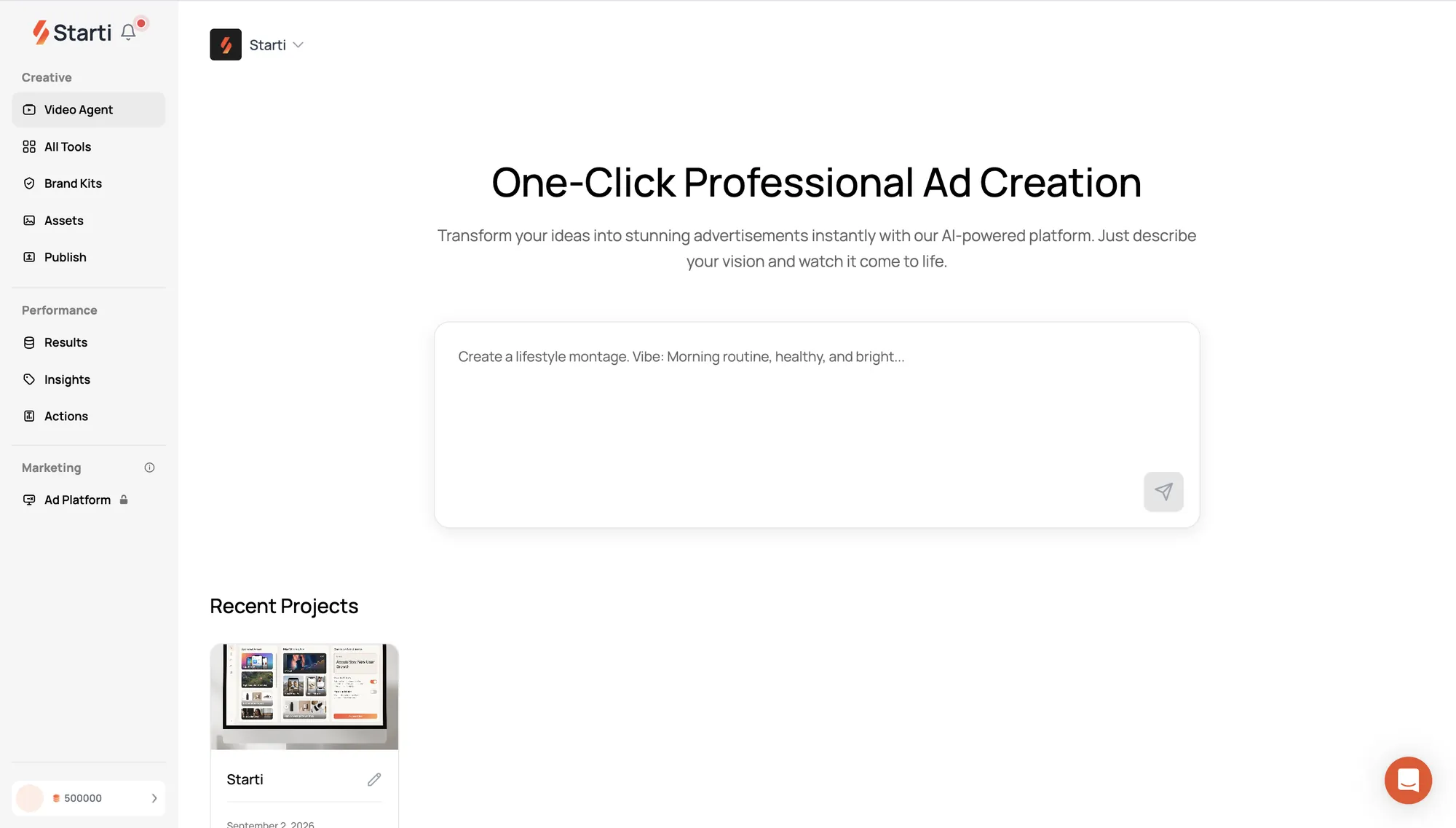
The marketing lead decides the goal, audience, offer, claims, and metric, with last round's findings as the evidence. In AI Studio, Video Agent starts from an existing brief or from the campaign goal, audience, offer, and key message, and every creative decision stays tied to that brief.
Concepts and storyboards
Generation gives the team a wide first pass: several concepts, each with a script and storyboard. The creative lead picks the idea, and brand approves the visual treatment at the storyboard, replacing a round of finished edits. In AI Studio, Video Agent turns the brief into concepts, scripts, and storyboards, and nothing moves forward without the team's approval.
Production
Rights and product accuracy stay with people. The brand team confirms which clips it has rights to reuse, and product marketing confirms that generated scenes show the product as it ships. Search replaces the hunt through shared drives. In AI Studio, AI DAM splits each imported video into described, searchable shots, and search results go straight into a new storyboard with the brand kit applied. Scenes without a matching clip are generated from the script.
Revision
The reviewer owns each note's scope: the scene it names and what stays as approved. Notes written scene by scene keep approved scenes out of the next round of review. In AI Studio, a plain-English request to Video Agent can revise a headline, replace a scene, or change the tone without restarting the project. Every revision returns to team review.
Versions and launch
AI handles the reframing and translation. Media chooses the placements for each concept and approves each format at its real dimensions, and each language is checked by someone who speaks it. In AI Studio, Video Agent reframes finished videos to 9:16, 16:9, 1:1, and 4:5 and localizes them into ten languages. Approved creatives publish from the asset library straight to connected Meta, Google Ads, and TikTok ad accounts.
Post-launch review
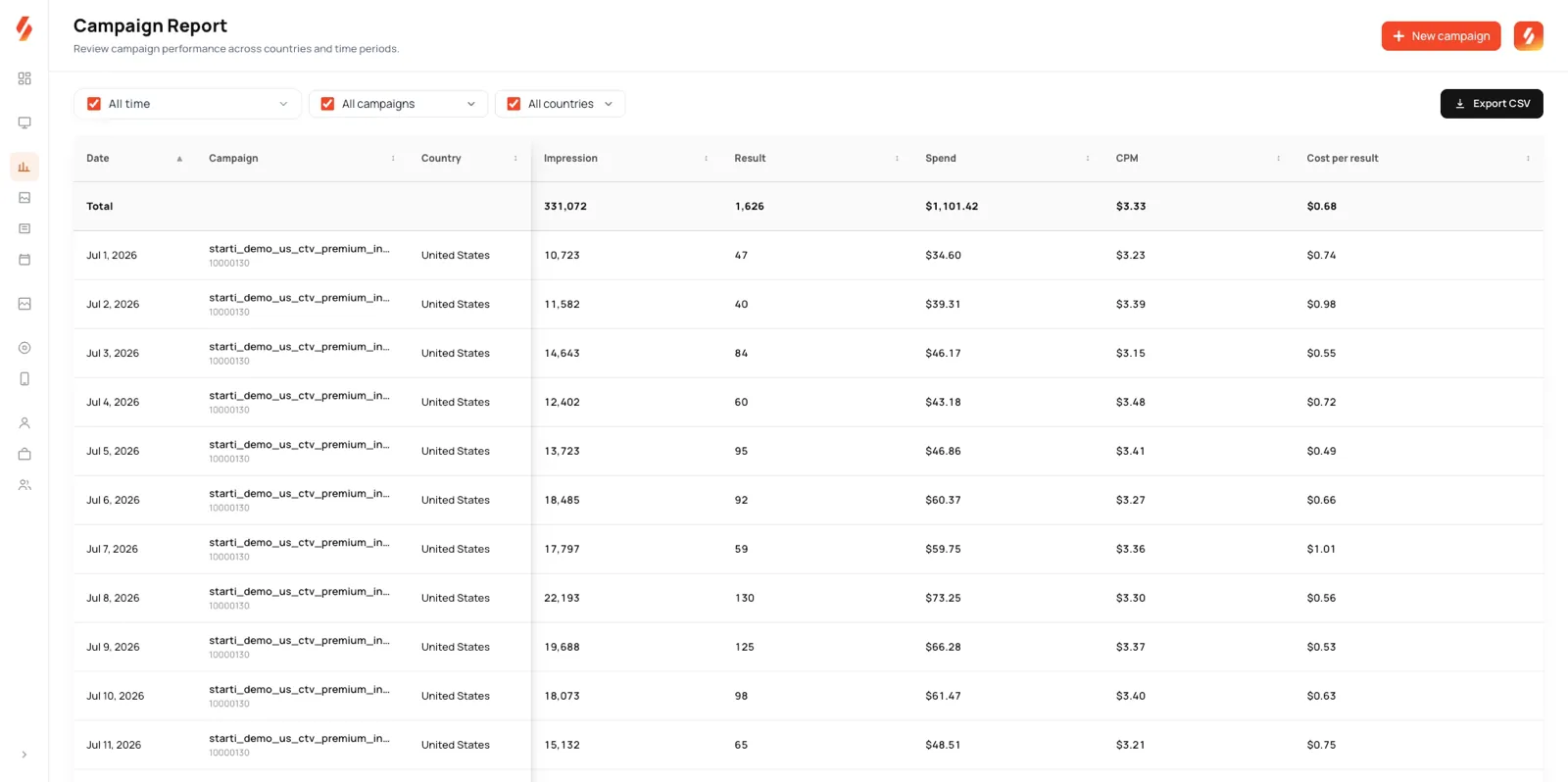
Results arrive ad by ad, and the useful question is which element did the work. Each ad is tagged by hook, visual style, and call to action, and the patterns are ranked against results; the performance lead decides which finding changes the next brief. In AI Studio, Smart Insight compares nine creative attributes against CTR, completion, and other outcomes across connected Meta, TikTok, and Google Ads accounts. Each finding cites its supporting ads, and findings turn into the next brief.
Who does the work
WFA's 2025 Global Content Production study of 50 global brands found fully owned in-house models declining, outsourced on-site teams rising by 66%, and network agencies gaining production share.
- In-house team plus platform: fits a team with a creative lead, its own brand assets, and steady weekly volume. With AI-powered creative production, editors move into review and a production platform takes the versioning hours. This setup pays off when ideas are plentiful and editing hours are short.
- Agency plus platform: AI in creative production fits three parts of agency work: concepting for briefs and pitches, versioning one approved idea across client formats and markets, and creative-level reporting. Strategy, craft, and the client relationship stay with the agency. Clients set the rules: in WFA's 2026 study, 69% require agencies to disclose when AI is used.
- Managed production service: fits a team without creative staff, or a launch that needs more concepts than the team can produce. The client keeps the brief, the direction review, and final approval; the service handles concepts, video ad production, and revisions.
Choose the setup by who signs off. The person accountable for results should approve the brief, the concept, and each final format where the work is made. Routing those approvals through email adds a handoff back.
What to measure
Three numbers show whether the workflow keeps pace with the media plan. Pilot measures for a new platform, such as review rounds and full rebuilds, are in Starti's guide to evaluating a creative automation platform.
- Output per week: assets that passed final approval and went live in the week, counted by concept and by file, against the counts the platforms set.
- Cost per usable asset: total production cost for a period divided by the assets that passed final approval and went live in it. Cost covers people's hours, tools, vendor and freelance fees, music and talent rights, and revision rounds. Count usable assets, not generations. For example, a month with 60 generated cuts, 36 approved, and 30 live has a denominator of 30. Split the cost by stage to see where it collects.
- Time from brief to launch-ready: from brief approval to final approval of the last required format. One late language version holds back the whole concept.
Read the three together. Cost per usable asset climbing against flat output means work is being discarded at review or rebuilt in revision. Longer brief-to-launch time at the same output points to an approval queue.
An example weekly production plan
Example: a consumer brand live on Meta, TikTok, and Demand Gen adds three distinct concepts each week, one hook each.
- Monday, results: the performance lead reads last week's results by hook, visual style, and call to action and names one element to keep and one to change. Sign-off: creative lead.
- Tuesday, brief: the creative strategist briefs three distinct concepts, the element under test, and the metric that decides it. Sign-off: marketing lead on the brief, legal on the claims.
- Wednesday, concepts and storyboards: AI drafts a script and storyboard for each concept, starting from library footage. Sign-off: creative lead on the concepts, brand on the visual treatment.
- Thursday, production and revision: scenes are assembled and generated, with each note sent to the scene it names. Sign-off: product marketing on product accuracy.
- Friday, versions and launch: vertical, square, and horizontal versions of all three concepts. Sign-off: media on each format; the buyer then adds the vertical cuts to Meta and TikTok ad groups, and all nine files to Demand Gen, three in each aspect ratio.
- Weekly output: nine files from three distinct concepts, about 36 a month.
- Monthly review: the three measures against the previous month.
AI creative production with Starti AI Studio
Starti AI Studio includes Video Agent, AI DAM, and Smart Insight, with concepts, scenes, and edits reviewed in one place. A team starts with a campaign goal and the brand's approved assets. AI Studio builds a reusable brand kit from the website and approved assets, and AI DAM makes footage uploaded or synced from Google Drive searchable by shot. Then run one current brief through Video Agent, or connect Meta, TikTok, and Google Ads accounts to Smart Insight to analyze the ads already running. Shared workspaces, brand access, and role permissions help teams organize creative work across clients and brands, and each brand keeps a separate library and brand kit.
Teams that want production handled can use Creative Studio, Starti's video ad production service. The client shares product, audience, goal, and assets, Starti's creative team handles concepts, production, and revisions, and direction and video are reviewed in the project workspace. Formats, 6s, 15s, and 30s cuts, and languages are prepared as part of production, and every ad Starti produces includes free performance tracking after launch.
See it in action on the AI Studio canvas of a brand film, then book a demo with a current brief.
Frequently asked questions
What is AI creative production?
It uses AI to generate concepts and scenes, revise single scenes, reframe and translate versions, and read results. People approve the brief, the concept, each scene, and every final format before launch, and findings from each round feed the next brief.
How are agencies using AI in creative production?
Three parts of agency work suit it: concepts for new briefs and pitches, adapting one approved idea to each client format, and reports broken down by creative element. Clients set the terms, such as whether AI use must be disclosed. Strategy, craft, and final client approval stay with the agency team.
Can AI automate ad creative production?
Much of it. Ad creative automation leaves four decisions with people: the brief, the concept, claims and rights, and final approval of each format. Keep those approvals in the tool where the work is made, each one assigned to a named owner.
How do you scale creative production with AI?
Add distinct concepts first, then hooks, then ratios and languages. Reuse approved footage before generating new scenes, keep revisions at the scene level, and track output per week, cost per usable asset, and time from brief to launch-ready. Raise weekly volume while cost per usable asset holds steady.