
How to Evaluate a Creative Automation Platform for Advertising

A creative automation platform should reduce repetitive production work while preserving the decisions that make advertising usable. A useful platform should carry campaign goals and approved brand context through production, revision, and learning. Teams should evaluate the approval path, revision control, and decision record alongside raw output volume.
Automation Moved the Bottleneck
Advertising delivery systems can already automate bidding, audience selection, asset combinations, and budget allocation. Teams still define the business goal, approve the source assets, and decide what success means.
That division of work changes the pressure on creative teams. Distribution systems can combine more assets and serve more variations. The production workflow still has to decide which message is accurate, which product image is approved, which version tests a useful hypothesis, and which result should influence the next brief.
Generation capacity can grow faster than review capacity. A team may receive dozens of scripts, images, or video clips in the time it previously took to commission one draft. The gain disappears when every output still has to be rebuilt, checked, routed, and explained before approval.
This is the practical standard for creative automation: the platform should shorten the path to an approved asset and preserve the reasoning needed for the next decision.
Five Bottlenecks More Output Can Expose
- The review queue becomes the production queue. A faster generator sends more work to the same creative lead, brand reviewer, legal reviewer, or product owner. Without approval stages, automation moves waiting time downstream.
- Brand context resets with every request. Logos, product imagery, approved claims, references, and tone often live in different folders or conversations. Teams repeatedly rebuild the same context, then spend review time correcting predictable drift.
- Variants lose their test logic. Ten different videos do not automatically represent ten useful tests. If several elements change at once, the team cannot tell which decision produced the result or what should be carried into the next version. Starti's guide to creative testing covers how to keep that logic.
- Small corrections trigger large rebuilds. A product shot, claim, hook, or closing frame may need one targeted change. Workflows that regenerate the entire asset create fresh review risk in sections that were already approved.
- Performance learning arrives too late. A report may identify a strong asset after the production team has already started the next batch. When results, creative decisions, and version history remain separate, each brief begins with interpretation work that the previous campaign should have resolved.
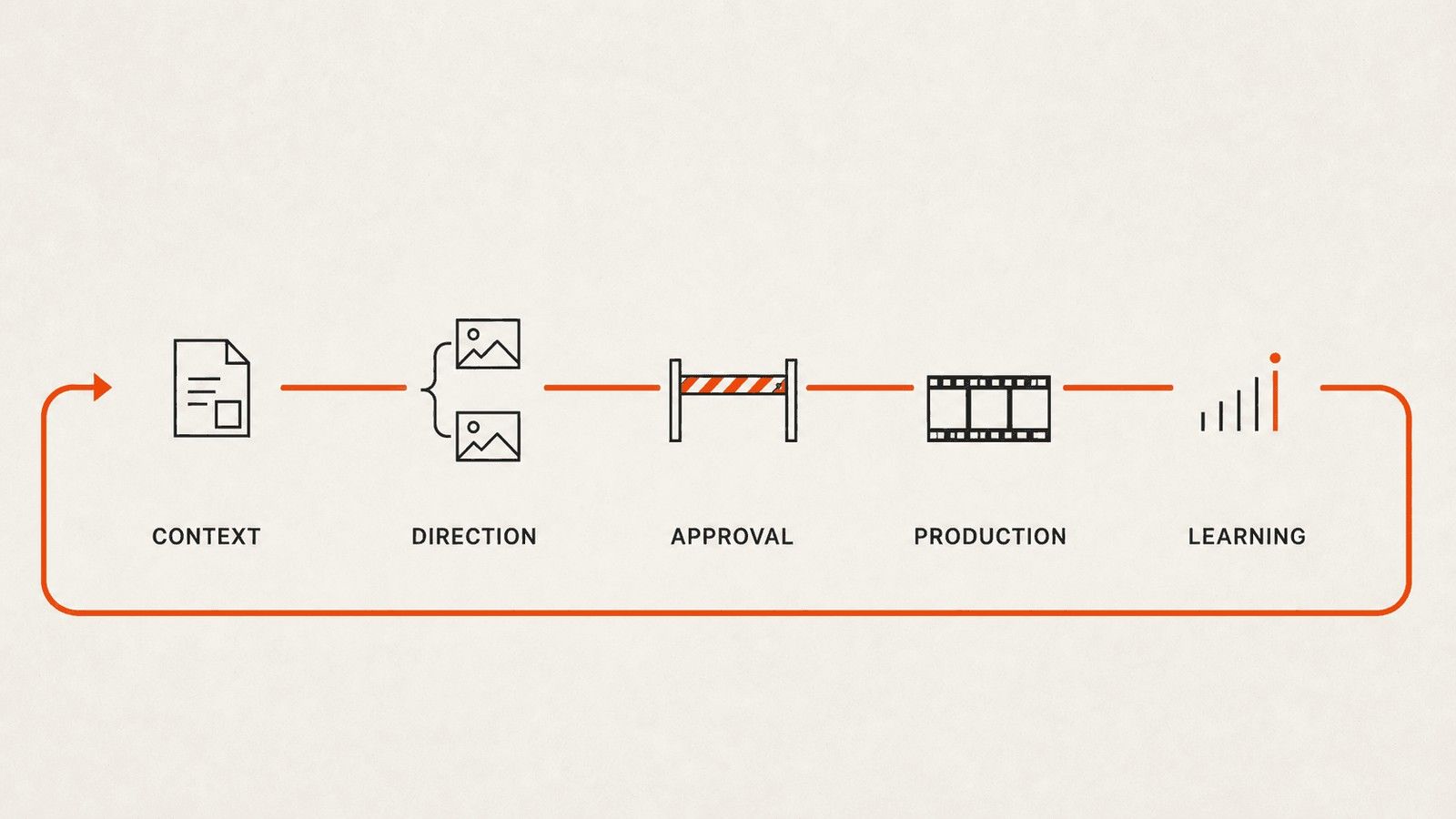
Six Questions Should Guide Evaluation
- Where does campaign context enter the workflow? The platform should accept more than a prompt. Look for a structured way to use the campaign goal, audience, offer, approved brand assets, product information, channel requirements, and review constraints.
- Can the team approve direction before full production? Concepts, scripts, and storyboards are less expensive to correct than completed video. Early approval reduces the amount of finished work that must be discarded or rebuilt.
- Can one element change without reopening the entire asset? Useful revision control keeps approved scenes stable while a specific hook, visual, line, product shot, or closing frame changes. This protects previous decisions and reduces review scope.
- Does each version have a reason to exist? A platform should help teams record what changed, why it changed, which audience or placement it serves, and what evidence will determine the next action. File count is a weak measure when version intent is unclear.
- Where do human decisions remain visible? Brand approval, claim accuracy, rights, consent, final quality, budget, and publication require accountable owners. Automation should make these decisions easier to locate and complete.
- Can results inform the next brief? The evaluation should establish which signals the platform can use, their level of detail, and who interprets them.
For vendor-level comparisons, our 2026 AI video ad tools guide applies the same workflow questions across seven operating models. Teams still deciding between an AI video ad generator and a production platform can settle that question first.
Measure the Path to Approved Output
A polished demo proves that a platform can produce something. A controlled pilot shows whether the platform fits the team’s actual operating process.
Use the same campaign brief, approved assets, offer, audience, and review standard for each shortlisted workflow. Define one concept and a small number of purposeful variations. Record:
- Time to the first usable creative direction.
- Number of review rounds before production.
- Time spent correcting brand or product context.
- Number of full rebuilds caused by a local change.
- Time to an approved asset that is ready for channel use.
- Reason each rejected asset failed review.
- Evidence used to continue, revise, or stop the test.
The pilot should produce a decision record.
The Workflow Beyond Generation
Starti’s AI Studio applies this operating logic to video advertising. The workflow begins with the campaign goal and centralized brand assets that keep approved context available during production. Within the Video Agent production workflow, a brief develops into concepts, scripts, and storyboards that can be reviewed before production. Approved scenes become the final cut, and an individual scene can be revised without rebuilding the entire video.
The same principles are visible in Starti's controlled workflow for Images 2.5 and Seedance 2.5, where reference roles and scene-level review stay attached to each generation.
Smart Insight connects results from Meta, TikTok, Google Ads, and configured custom network accounts to the content of each video ad.
Before evaluating any platform, map the current path from brief to approved asset. Mark every repeated context handoff, approval wait, unnecessary rebuild, and lost learning. The most useful automation target is the point where those costs accumulate. Teams evaluating whether AI Studio fits their workflow can book a demo to review campaign requirements, approval stages, production needs, and available measurement inputs.
FAQ
What is a creative automation platform?
A creative automation platform coordinates repeatable work across creative production. Depending on the product, this may include brand context, templates, scripts, visual generation, video assembly, versioning, approvals, channel adaptation, and performance inputs. For the tagging layer behind performance inputs, see Starti's guide to creative intelligence.
How is creative automation different from AI content generation?
AI content generation produces individual text, image, audio, or video outputs. Creative automation connects those outputs to a broader production process, including context, review, revision, version history, and the next campaign decision.
Does creative automation replace a creative team?
No. It can reduce repetitive production and coordination work. People still own creative judgment, brand standards, claims, rights, approvals, budget decisions, and final quality.
What should a team automate first?
Start with the repeated handoff that creates the most delay or rework. Common starting points include rebuilding brand context, routing early creative approval, adapting approved assets, and making targeted revisions.
How should performance teams compare platforms?
Use the same brief and approval standard, then compare time to approved asset, revision loops, context corrections, usable output rate, and the evidence available for the next test.