
On this page
In programmatic CTV, buyers bid a CPM and sellers set CPM floors. The media side of CTV advertising cost is the impressions a plan needs, in thousands, times that price. OTT advertising cost runs on the same unit, and an OTT CPM reads the same way as a CTV CPM. In IAB Tech Lab's definitions, OTT describes how content is delivered over IP and CTV describes where it is watched, on connected television devices. A streaming ad that plays on a television fits both terms and is bought at a CPM under either.
How CTV and OTT advertising cost is priced
IAB Tech Lab's OpenRTB 2.6 specification states the bid price as a CPM, while each transaction covers a single impression. The impression floor, the deal floor and each duration floor are minimum bids expressed in CPM. Sellers can set separate duration floors for ranges such as 1 to 15 seconds and 16 to 30 seconds. Ask for every quote as a CPM at the spot length the plan will run.
Other pricing bases appear in IAB's Digital Video Glossary. Cost per completed view (CPCV) is cost divided by completed views, and cost per point divides campaign cost by each rating point of the target demographic reached. To compare a CPCV quote, convert it to CPM: CPCV × completion rate × 1,000. For example, a $0.02 CPCV at a 95% completion rate equals a $19.00 CPM.
In IAB's 2026 Digital Video Ad Spend and Strategy report, 36% of 360 surveyed buyers ranked guaranteed business outcomes among their top five criteria for where to spend TV and video dollars. Price an outcome offer against the cost per install or cost per purchase the team already gets from CPM-bought media, under the same attribution window.
What CTV CPMs look like in benchmark data
ANA's Q3 2025 Programmatic Transparency Benchmark is built on marketers' impression log-level data. From July to September 2025, 21 of its 39 participating marketers contributed data, covering 3.8 billion CTV impressions and $65 million in CTV ad spend.
- Overall CPM: $16.91 for CTV, up from $16.79 in the second quarter.
- Median CPM: $20.98, the midpoint across advertisers, up from $19.18.
- Private marketplace CPM: $16.94, on 99.2% of CTV spend.
Web and mobile ran at a $5.43 overall CPM in the same data. ANA prefers medians to averages: outliers do not skew a median. Run a first plan at both the $16.91 overall CPM and the $20.98 median.
Which costs sit inside the CPM and which go on top
ANA's CPM divides total ad spending by impressions. Its cost waterfall splits that same spending into transaction costs, including DSP platform, DSP data and SSP platform costs, and the seller revenue that reaches publishers. Those platform and data costs are already inside the $16.91, and Starti's CTV DSP guide breaks down each share.
Agency fees, ad serving fees and managed service fees are not part of ANA's cost waterfall. Add them on top of the benchmark CPM at the contract rate.
ANA also reports TrueCPM: the CPM paid for TrueImpressions, those meeting defined cost, quality and safety requirements, with the full ad spending counted. The median CTV TrueCPM was $23.92 in Q3 2025, down from $34.66. ANA lets each marketer define its own TrueImpression criteria. Set yours before launch, then compare platforms and deals on spend per thousand qualifying impressions.
CIMM's CTV planning guide warns against over-slicing audiences into tiny groups that increase CPMs. Start each line item with the fewest audience segments that describe it.
How to size a first CTV budget
Build the budget from zero, as CIMM's guide recommends: start at $0 and work up from media objectives instead of last year's spend. Then work backward from the reach each line item needs.
- Reach: the households each line item needs to reach.
- Frequency: exposures per household over the flight. In CIMM's budget guide, low monthly reach at 3 to 5x frequency sits at the lower budget end, and high reach at 5x or more at the higher end.
- Line items: each audience or deal type with its own budget and read. CIMM's guide asks for the minimum spend for impact on each platform.
- Test length: the flight in weeks, which sets weekly pacing. Starti's guide to CTV ad measurement covers how long holdout and geo tests run.
- CPM: a quote converted to CPM at the plan's spot length, or the ANA benchmark.
- Budget reserve: CIMM's cheat sheets reserve 20 to 30% for mid-flight adjustments when the goal is reach and frequency, and upwards of 50% for real-time adaptation when the goal is outcomes.
Impressions equal households per line item × frequency × line items. Media at launch equals impressions ÷ 1,000 × CPM, and the total media budget equals media at launch divided by one minus the reserve share. When the total runs past what the team can spend, drop a line item and keep frequency inside CIMM's band.
Example: A first CTV budget worked backward
For an app advertiser's first outcome test, media budget only, take these example inputs:
- Campaign type: outcome campaign judged on cost per install.
- Line items: two audiences, a first-party lookalike and a contextual audience.
- Reach per line item: 125,000 households.
- Frequency: 4 exposures per household over the flight, inside CIMM's 3 to 5x band.
- Flight: six weeks.
- CPM: $16.91, ANA's Q3 2025 overall CTV CPM.
- Budget reserve: 50%, where CIMM's guidance for outcome campaigns starts.
- Impressions: 125,000 × 4 × 2 = 1,000,000.
- Media at launch: 1,000,000 ÷ 1,000 × $16.91 = $16,910.
- Total media budget: $16,910 ÷ 0.5 = $33,820, with $16,910 held in reserve.
- Launch pacing: $16,910 over six weeks, about $2,820 a week.
- Median case: at ANA's $20.98 median CPM, media at launch is $20,980, the total $41,960, and launch pacing about $3,500 a week.
- Awareness version: a reach and frequency campaign with a 25% reserve totals $22,547 at $16.91.
- Fees outside media: agency, ad serving and managed service fees go on top at the contract rate.
Hold the reserve in the plan from day one. On an outcome test, half the media budget is held for real-time adaptation based on performance signals, and the two line items reach their planned households on the other half. Entry minimums by platform are compared in Starti's list of self-serve CTV advertising platforms. Production of the spot is its own line, priced in Starti's guide to what a TV commercial costs.
What buyers say about streaming TV advertising cost
IAB's 2026 report surveyed 360 buyers between February 20 and March 13, 2026. Cost, meaning total outlay and CPMs, was a top reason to reduce or eliminate spend with a streaming partner for 47% of them. That share rose from 41% in 2025 and tied with audience delivery. As a top five criterion for where TV and video budgets go, price efficiency fell to 32% from 38%, while targeting capabilities rose to 49% from 39%.
Agree before launch on the cost per outcome at which a partner is cut, and report CPM beside delivery against the planned households in one weekly view.
Bid and budget optimization in AI DASH
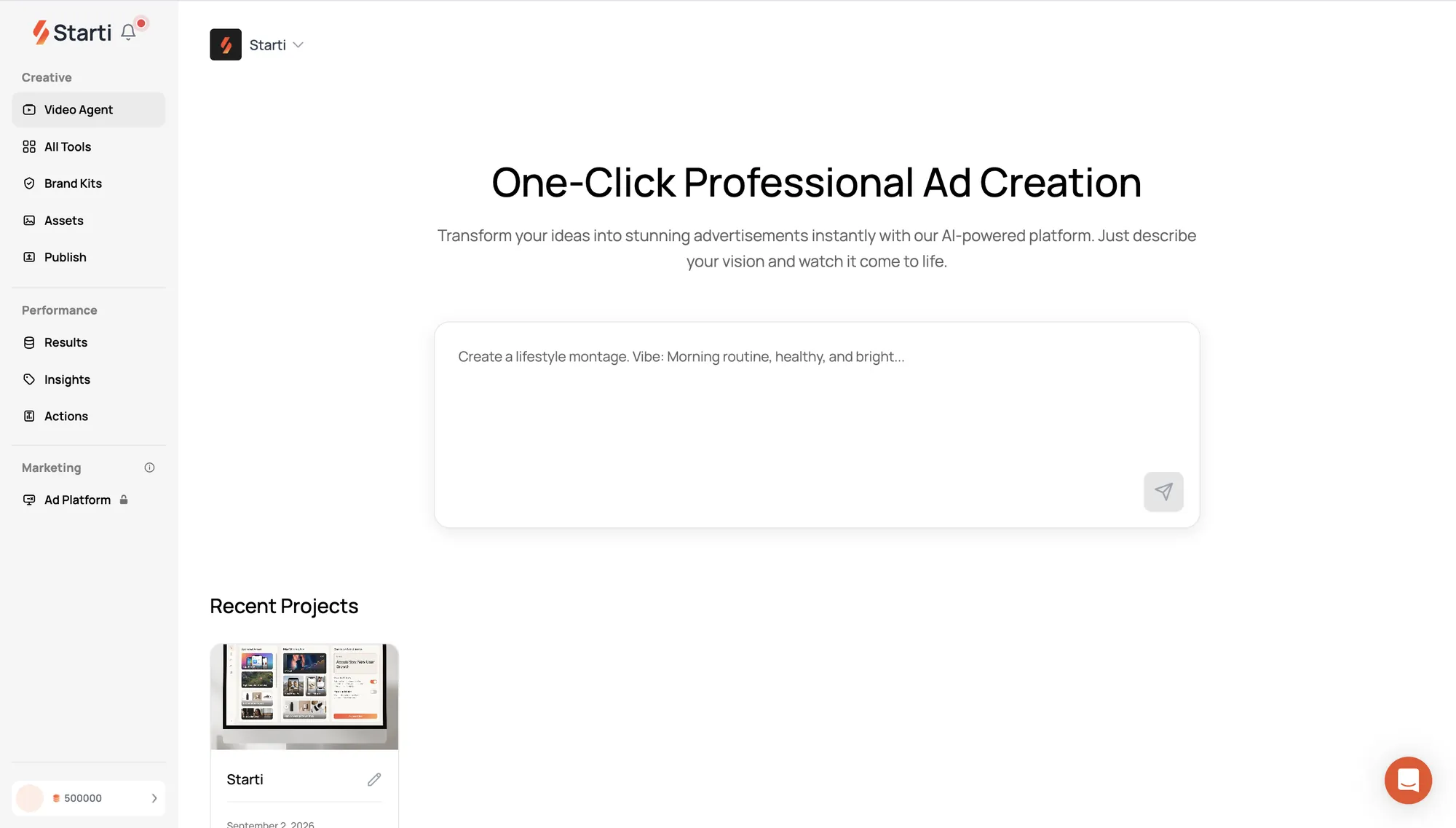
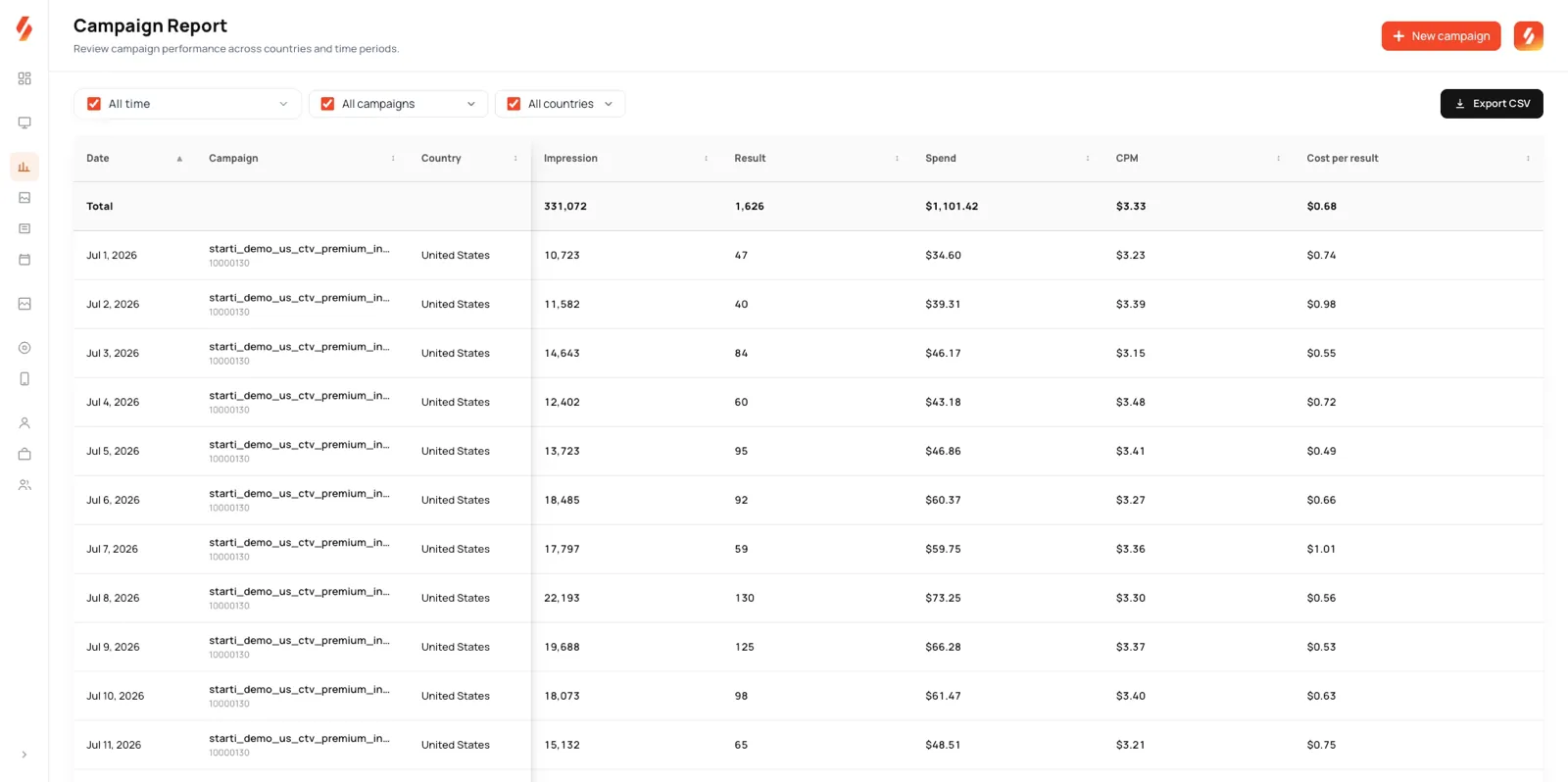
AI DASH is Starti's performance CTV platform, with planning through measurement in one connected workflow. Campaign delivery, creative performance, media quality, and results sit in one reporting layer, and CTV exposure connects to supported visits, installs, registrations, purchases, and revenue.
During a flight, the Adaptive Performance Engine continuously evaluates campaign performance and adjusts bids and budgets across creatives and media automatically. Budget shifts toward combinations showing stronger results as creative response, auction conditions, and media efficiency change, with fewer repetitive bid and budget adjustments by hand. The engine responds as new campaign data becomes available instead of waiting for periodic reviews.
See how the Adaptive Performance Engine shifts bids and budgets in real time.
Frequently asked questions
How much does OTT advertising cost?
OTT and CTV ads bought programmatically are priced per thousand impressions. In ANA's Q3 2025 benchmark, programmatic CTV ran at a $16.91 overall CPM and a $20.98 median CPM. A campaign's total follows from the impressions it needs at its planned reach and frequency, plus a reserve for mid-flight changes.
What is a good CPM for CTV?
Judge a quote on the impressions that meet the team's own cost, quality and safety criteria. ANA's median CTV TrueCPM, the price per thousand impressions meeting defined cost, quality and safety requirements with the full ad spending counted, was $23.92 in Q3 2025. Ask each seller for the share of impressions that meet the team's criteria, and compare spend per thousand qualifying impressions.
Is a CTV CPM different from an OTT CPM?
The unit is the same: a price per thousand impressions. IAB Tech Lab uses OTT for content delivered over IP and CTV for viewing on connected television devices.
How much should a first CTV test budget be?
Work backward from reach. Households per line item × frequency × line items gives impressions, impressions ÷ 1,000 × CPM gives media at launch, and dividing by one minus the reserve share gives the total. CIMM's cheat sheets put the reserve at 20 to 30% for reach and frequency and upwards of 50% for outcomes.
Which fees add to connected TV advertising cost beyond the CPM?
ANA's CPM is total ad spending over impressions, and its cost waterfall splits that spending into DSP, SSP and data costs and seller revenue. Agency, ad serving and managed service fees sit outside the waterfall and go on top at the contract rate.