
Video Localization for Ads: Translate, Dub, or Transcreate
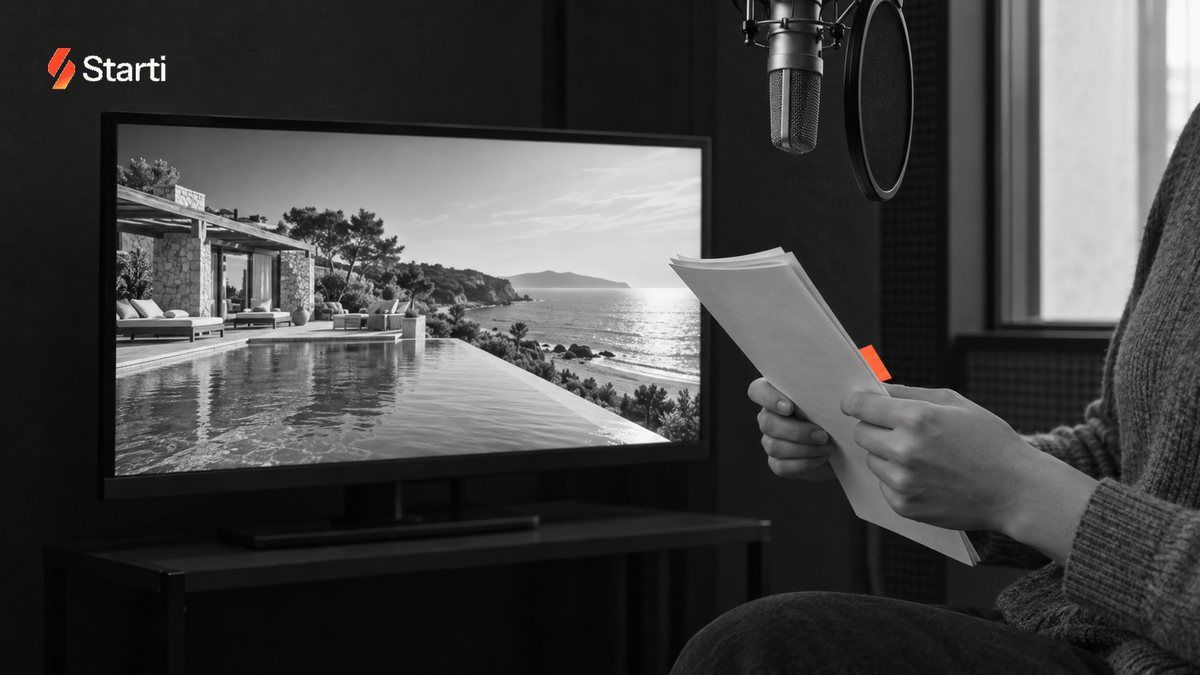
Video localization for ads is the work of making one approved ad run in another language and market. It happens at three levels: translated text, a new voice track, or a rewritten ad. The right level depends on what differs between markets: the words, the voice, or the reason to buy.
Dubbing has become a platform feature. YouTube made auto dubbing available to all creators in February 2026 across 27 languages, and Meta reported in January 2026 that hundreds of millions of people watch AI-translated videos every day. Ad tools have followed: Meta Ads Manager translates ad voiceovers from English to Spanish, TikTok Symphony translates and dubs ad videos, and Amazon Ads offers subtitle translation for Sponsored Brands video. With a dub a few clicks away, the harder decision is which ads need more than a new voice.
Three Levels of Ad Localization
The American Translators Association defines localization as adapting content to a specific market "through translation and cultural adaptation." It defines transcreation as "creatively adapting a message's intended meaning" while "creating brand new messaging that is culturally appropriate," and notes it is often used for literary, marketing, and advertising content. For a video ad, that gives three working levels:
- Translate: subtitles, captions, and on-screen text in the new language, with the original voice and footage unchanged.
- Dub: a new voice track in the new language, either a recorded voice or an AI voice, with lip sync where someone speaks on camera.
- Transcreate: a new version of the ad written for the market, which can change the hook, the offer, the proof, the cast, or the setting.
When Translated Text Is Enough
Translated text fits ads that carry the message on screen: product demonstrations, app walkthroughs, and text-led feed ads. Amazon Ads offers a video translation service for Sponsored Brands video in selected countries. Professional linguists return the video with embedded subtitles for both audio and on-screen text within ten days. Meta's multi-language ads let one ad carry a different video, image, or text for each language, and Meta serves the version that matches the viewer. Its automatic translation covers the ad copy, and each translated version is labeled "Automatically Translated."
Placement specs decide whether text alone is accepted. Amazon's Sponsored Brands video spec accepts on-screen text or a voiceover in the marketplace language. Its Prime Video feature rotator spec, a top hero placement for TVOD and channel advertisers, asks for videos in the primary language of the locale and no subtitles in the video. Translation for that placement cannot be delivered as subtitles.
When the Ad Needs a New Voice
Dubbing fits ads carried by narration or a spokesperson, and placements that play with sound. The tools now produce a dub from the finished ad. TikTok's Symphony Creative Studio translates and dubs a video's voiceover, either cloning the original voice or using a stock voice, and can add lip sync for a speaker on screen. Meta said in March 2026 that generative AI voiceover translation for ads was reaching more advertisers, from English to Spanish to start.
Machine dubbing has known limits, and the vendors list them:
- Lip sync: TikTok's lip sync does not work with several people speaking, a covered mouth, poor lighting, or background noise.
- Vocabulary: YouTube's auto dubbing help page warns of mispronunciations and of trouble with proper nouns, idioms, and jargon.
- Availability: TikTok's translate and dub feature is not offered to users in Texas and Illinois.
A script written for dubbing addresses the vocabulary limits directly: short sentences, no idioms, and a pronunciation list for the brand name, product names, and any number read aloud.
When the Message Has to Change
Transcreation is the part of marketing localization for markets where the approved ad is no longer true or no longer persuasive. If a claim, price, offer, or legal line does not hold in the market, the ad needs a rewritten version, whatever the voice. If only the words or the voice differ, text or dubbing is enough. The ATA describes transcreation as being to translation what copywriting is to writing. In practice it means rewriting the brief for the market and producing the changed scenes, not re-voicing the old ones.
Markets That Require the Local Language
Some markets and platforms require the local language, which rules out running the source-language ad as it is:
- Quebec: the Charter of the French Language requires commercial advertising in French, with exceptions set by the Charter and its regulations, and allows another language alongside French where French is markedly predominant. The language office's guide to signs and advertising sets out the same rule and notes that new rules on trademarks and business names took effect on June 1, 2025. Its social media guide says a company's posts for the Quebec market, including videos and text inside images, must be in French, with the French version at least equivalent to any other version.
- France: the Ministry of Culture summarizes the 1994 Toubon law as making French mandatory in all written, spoken, or audiovisual advertising, with separately registered slogans exempt.
- Amazon storefronts: Amazon Ads requires ads in the primary language of the site where they appear, while official slogans and taglines need not be translated.
Rights and Disclosure for AI Voices and Faces
The 2025 SAG-AFTRA Commercials Contract requires a performer's clear consent before their digital replica is used in a commercial. Consent must rest on a reasonably specific description of the intended use, and any use beyond it needs new consent. ElevenLabs prohibits cloning a living person's voice without their explicit and informed consent or other valid authorization. HeyGen's API requires proof that the person agreed before it generates video with their digital twin, unless the account has signed an indemnity agreement.
Disclosure rules differ by market and platform:
- New York: General Business Law section 396-b, in effect since June 9, 2026, requires a conspicuous disclosure when an ad includes an AI-generated synthetic performer. It exempts uses where AI solely involves the language translation of a human performer.
- European Union: Article 50 of the AI Act applies from August 2, 2026. A deployer of AI that creates a deep fake, meaning content that resembles existing persons, objects, places, entities, or events and would falsely appear authentic, must disclose it at first exposure. The Commission's July 2026 guidelines treat a company that uses AI to make a deep fake for an ad shown in the EU as a deployer, even when it is based outside the EU. A brand that only commissions an agency, without control over its use of AI, is not a deployer. For the marking that AI providers apply, the guidelines class AI translation of text as a standard edit and synthesized speech in a specific person's voice as a change that must be marked.
- TikTok: the ad policy treats AI voice cloning that makes a person say something they did not say as significantly edited content, which needs the AI-generated label or the advertiser's own clear disclaimer. Symphony Creative Studio adds the label to every exported video.
Checks Before a Localized Ad Runs
- Does each market get the right level: text, voice, or a rewritten ad?
- Has a native speaker reviewed the translation, the pronunciation, and the on-screen text against the approved English version?
- Do claims, prices, offers, and legal lines match what is true in that market?
- Is there written consent, with a description of the use, for every real voice or face that is cloned or re-synced?
- Does the market or the platform require an AI disclosure, and is it on screen at first exposure?
- Will the placement accept subtitles, or does it need the voice in the local language?
Starti's guide to AI video ad production covers the review that comes before localization, and the sign-off checklist covers who approves each stage and each format.
How Starti AI Studio Localizes Ads
Video Agent, part of Starti AI Studio, localizes a finished video into ten languages with translation, dubbing, and lip sync, and reframes it to 9:16, 16:9, 1:1, and 4:5 with subject-aware cropping. Approved versions publish from the asset library to a team's connected ad accounts on Meta, Google Ads, and TikTok. For teams that want video localization services rather than software, Creative Studio is Starti's managed option, where the team prepares formats, cut lengths, localized voice, and on-screen text as part of production. The video brief template records the permitted markets and channels for each asset and claim before production starts.
Book a demo to see Video Agent.
Frequently Asked Questions
What is video localization?
Video localization adapts a video for another language and market. For ads it ranges from translated subtitles and on-screen text, through a dubbed voice track, to a transcreated version with new scenes or offers.
What is the difference between translation, localization, and transcreation?
Localization is the umbrella term for adapting content to a market through translation and cultural adaptation. At one end, translation converts the words. At the other, transcreation rewrites the message so it works in the new market, and the American Translators Association notes it is mostly used for marketing and advertising copy.
Is AI dubbing good enough for ads?
For voiceover-led ads with clear audio, yes, with review. Meta Ads Manager translates ad voiceovers from English to Spanish, and TikTok Symphony Creative Studio dubs a voiceover and can add lip sync for a speaker on screen. Vendors list the limits: several speakers, covered mouths, poor lighting, background noise, and proper nouns or idioms. A native speaker should review every dub before it runs.
Do AI-dubbed ads need a disclosure?
Disclosure rules can apply where a cloned voice or synced lips make a real person appear to say words they did not say. From August 2, 2026, the EU AI Act requires deep fakes to be disclosed at first exposure. TikTok requires the AI-generated label or a clear disclaimer when AI voice cloning makes a person say something they did not say.
Can an English ad run in Quebec?
Generally not on its own. Quebec's Charter of the French Language requires commercial advertising in French, with exceptions set by the Charter and its regulations, and allows another language alongside French where French is markedly predominant.
Which ad platforms offer translation or dubbing?
Meta's multi-language ads translate ad copy, and in March 2026 Meta extended AI voiceover translation for ads to more advertisers, from English to Spanish. TikTok Symphony Creative Studio translates and dubs a video's voiceover. Amazon Ads offers a subtitle translation service for Sponsored Brands video, handled by professional linguists and returned within ten days.