
CTV Audience Targeting: Nine Options and Their Signals
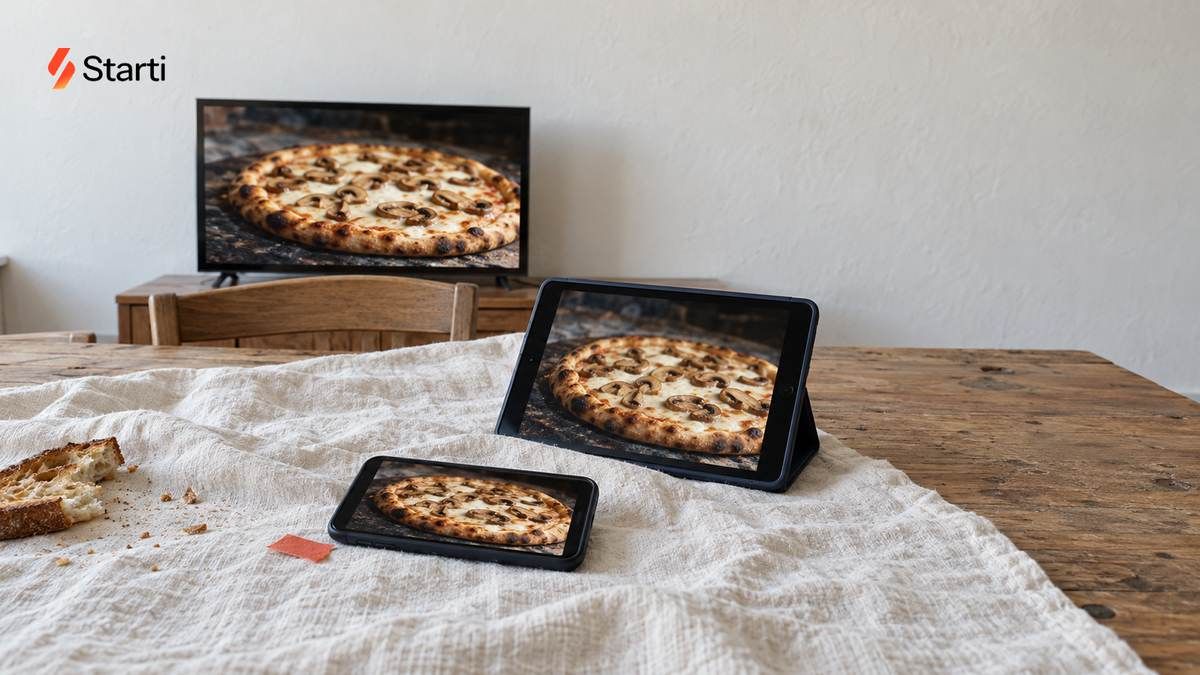
CTV audience targeting works at the household level. A streaming ad reaches a television that shares a home network, and often a login, with the phones and laptops in the same house. Most targeting options are rules for deciding which households receive the impression, and a rule is only as good as the identifier behind it.
Buyers have moved targeting to the top of the list. In the IAB's 2026 Digital Video Ad Spend and Strategy report, 49 percent of 360 decision-makers named targeting capabilities as a top criterion for where TV and video money goes. Content quality followed at 46 percent. Targeting was up ten points from 2025, and the report ties the rise to IP degradation and AI-driven traffic.
Streaming took 49.0 percent of US television time in Nielsen's July 2026 Gauge.
How a Platform Knows It Is the Same Household
The IAB's September 2026 standard for classifying video advertising sets the terms. Impression-based delivery goes to a known audience: a logged-in person, or a household identified by a smart TV with an IP address. That identity supports targeting, frequency capping, and measurement. Deterministic signals come from logins, automatic content recognition, and set-top boxes. Probabilistic signals are modeled from behavior and context when no resolved identity exists.
Platform documentation names three identifiers:
- IP address: Vibe's CTV fundamentals guide says CTV targets households via IP address and notes that the TV and the phone or laptop are typically on the same home Wi-Fi network. Amazon Ads' authenticated graph guide counters that IP addresses can rotate frequently and give unreliable household recognition.
- Device identifier: the IFA passed in the bid request, with an ifa_type field that declares whether the device, the publisher, the SSP, or a session supplied it. IAB Tech Lab's original 2018 OTT IFA guidelines were deprecated in 2023, and the field definition now lives in the OpenRTB community extensions.
- Login: Amazon reports authenticated reach to more than 90 percent of US households through sign-ins to Amazon, Fire TV registrations, and Prime Video streams, per its 2025 internal data.
Identity graphs link these identifiers. MNTN's identity graph documentation from May 2026 lists the IP address and the device identifier among its inputs and covers more than 120 million households. It caps a household at 50 devices, since larger networks are usually hotels, airports, or offices. The Trade Desk's explainer, updated September 2026, clusters cookies, mobile ad IDs, CTV IDs, UID2, and RampID at the household and individual level. CTV and streaming device IDs sit at the household level because several people use them.
Nine Targeting Options and Their Signals
- Geography: Roku Ads Manager offers states, residential ZIP codes, and designated market areas, and Display & Video 360 offers DMA or country for most CTV inventory. Signal: the location the platform resolves for the request.
- Daypart: scheduling in Roku runs in one-hour increments by the viewer's local time, and DV360's day and time targeting runs on the user's local time or the advertiser's. The IAB report finds 19 percent of buyers count daypart among the drivers of lower-funnel results. Signal: the clock.
- Content and genre: genre targeting in Roku exposes 12 genres and three content ratings for awareness campaigns, off by default. DV360 separates category, an app-level signal, from genre, a content-level signal from inside the stream. Proximic by Comscore's 2026 State of Programmatic Report, released in January 2026 from more than 200 media buyer respondents, found 43 percent planning more contextual targeting, and 50 percent of respondents in privacy-regulated verticals call it their main tactic. Signal: publisher metadata, with no identifier required.
- Demographics and household income: DV360 lists gender, age, parental status, and household income for US inventory. Roku's special ad categories for credit, housing, and employment remove income, age, gender, and ZIP targeting. Signal: demographic attributes attached to the household record.
- Behavioral and in-market segments: Experian describes more than 3,500 syndicated audience segments activated across 200 or more destinations. TransUnion's March 2026 investor presentation puts connected TVs in its identity database at 92 million after its OneTru combination. DV360 requires an IFA, IDFA, or AAID for any third-party audience to serve on CTV. Signal: a data provider's record linked to the household's devices through a graph.
- Publisher and retailer data: Amazon Ads lists more than 20,000 first-party audiences built from shopping and streaming signals. Roku Advertising states that its data is powered by more than 125 million daily active users in the US. In March 2026 Walmart and Vizio announced a planned Walmart login for new Vizio smart TVs with closed-loop sales attribution, and in May 2026 NBCUniversal said brands can add Instacart data. Signal: logged-in behavior inside one company's properties.
- Advertiser lists: DV360's Customer Match accepts first-party IFA lists. Vibe matches Customer.io and HubSpot profiles to CTV households through email and IP. It recommends at least 50,000 contacts and needs 24 to 48 hours before launch. IAB Tech Lab has published clean room guidance for sharing first-party data since July 2024. Signal: an email address or device ID resolved through a graph.
- Viewing-based audiences from ACR: automatic content recognition identifies the content on a television screen by matching on-screen pixels or audio signatures to known programming, in the words of IAB Europe's 2026 programmatic CTV guide. Samsung Ads and LG Ad Solutions sell audiences built on ACR data from their own sets, and LG cites 49 million US LG smart TVs. Signal: what the screen displayed, with the viewer's consent.
- Retargeting: MNTN's pixel identifies site visitors and builds segments such as past purchasers and cart abandoners. AppsFlyer added retargeting measurement for CTV app campaigns on August 1, 2026, covering re-engagement and re-attribution, while a CTV ad driving a mobile install remains outside retargeting support. Signal: a site or app event tied back to the household.
Exclusions come with several of these options. Roku's location and genre targeting both support exclusion lists, and MNTN excludes households by location.
Frequency Is a Targeting Decision
Household identity decides how many times a home sees the ad. DV360 caps frequency across CTV apps on the same device when the IFA or another supported identifier type is passed in the bid request, and impressions without one are excluded from capped line items. Amazon says household recognition lets it cap across every streaming app in use and reports 57 percent fewer redundant exposures, per its internal data from March 2026.
In the IAB report, 37 percent of buyers would pay extra for cross-device or household targeting and measurement, and 32 percent for frequency capping across partners. Premion's 2026 CTV/OTT survey with Advertiser Perceptions is a vendor-commissioned study of 151 agency or brand-side marketers at US advertisers spending at least $250,000 a year, fielded in October 2025. In it, 49 percent named better frequency control across platforms among the most valuable innovations for CTV campaigns, and 33 percent said it is likely in 2026. Innovid's August 2026 case study for one political campaign suppressed households above 18 impressions and raised bids on those below three, across two platforms.
Consent Rules in 2026
On the browser side, Google announced in October 2025 that it would retire Chrome's IP Protection, and its status page in August 2026 lists the feature as scheduled for phaseout.
Notice and consent now sit on the screen. California's CCPA regulations took effect January 1, 2026. A business that sells or shares personal information collected through a connected device, such as a smart TV, must provide the opt-out notice before or at the time the device begins collecting it. The Texas attorney general announced agreements with Samsung on February 26, 2026 and with LG on May 11, 2026. Samsung must obtain Texas consumers' express consent before collecting ACR viewing data, and LG's agreed judgment requires affirmative express consent once a 180-day period after the judgment takes effect has run. Comprehensive privacy laws in Indiana, Kentucky, and Rhode Island took effect January 1, 2026. Connecticut's amendments on July 1, 2026 extended its law to any business processing data on at least 35,000 residents, selling personal data, or processing sensitive data.
Six Questions for a CTV Platform
- Which identifier resolves the household: IP address alone, device IFA, login, or a graph, and what share of impressions carry an IFA?
- Does each segment come from deterministic data or from a model?
- How is an advertiser list matched, through email, IP, or device ID, and what is the minimum list size?
- Is frequency capped per household across apps, or per app on one device?
- Which exclusions run by default: existing customers, non-residential IP ranges, special ad categories?
- Where does the viewing data come from, and what consent screen did the viewer see?
How Starti Targets
SmartReach, in AI Dash, starts with the product, not just the audience. It organizes product and audience intelligence across five categories and more than 500 tags, covering audience intents, use cases, traits, content contexts, and product model, and builds on first-party data and conversion signals. Household Resonance extends a CTV campaign to the eligible mobile, tablet, and desktop devices in the same household. Retargeting applies SmartReach to existing users, combining first-party audience data with engagement and conversion signals. For how a household match proves an outcome, see Starti's guide to CTV ad measurement.
Book a demo to see SmartReach.
Frequently Asked Questions
What is CTV audience targeting?
CTV audience targeting selects which households receive a streaming TV ad. The signals include geography, daypart, content genre, demographics, third-party segments, publisher first-party data, advertiser lists, ACR viewing data, and site or app retargeting. Most options depend on an identifier: an IP address, a device IFA, a login, or a graph that links them.
How does household-level targeting work on CTV?
The television, phones, and laptops in a home usually share one IP address, and streaming apps add logins and device identifiers. Identity graphs cluster those signals into a household record. Segments, frequency caps, and attribution are applied to that record.
What targeting options do CTV platforms offer?
Common options are state, ZIP, and DMA geography; dayparts; genre and content category; and age, gender, parental status, and household income. Data-driven options add behavioral and in-market segments, publisher and retailer audiences, advertiser customer lists, ACR-based viewing audiences, and retargeting of site visitors or app users.
How does CTV retargeting work?
A pixel or app event records a visit or action, and the platform matches the visitor's IP address or device identifier to households that can be reached on streaming TV. MNTN documents pixel-based retargeting segments, and AppsFlyer added retargeting measurement for CTV app campaigns in August 2026.
Is CTV targeting deterministic or probabilistic?
Both. The IAB's September 2026 classification standard treats logins, ACR, and set-top box data as deterministic and modeled inferences from behavior and context as probabilistic.
What privacy rules affect CTV targeting in 2026?
California's CCPA regulations effective January 1, 2026 require a business that sells or shares data collected through a smart TV to show an opt-out notice before collection begins. Texas reached ACR consent agreements with Samsung and LG in 2026. New comprehensive privacy laws took effect in Indiana, Kentucky, and Rhode Island on January 1, 2026, and Connecticut's amendments on July 1, 2026.